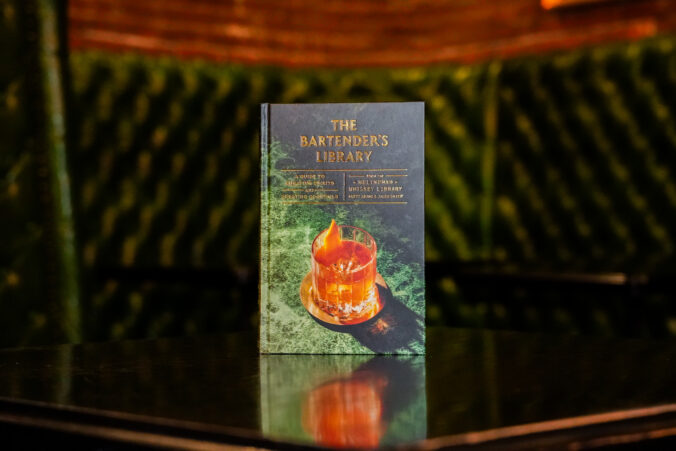
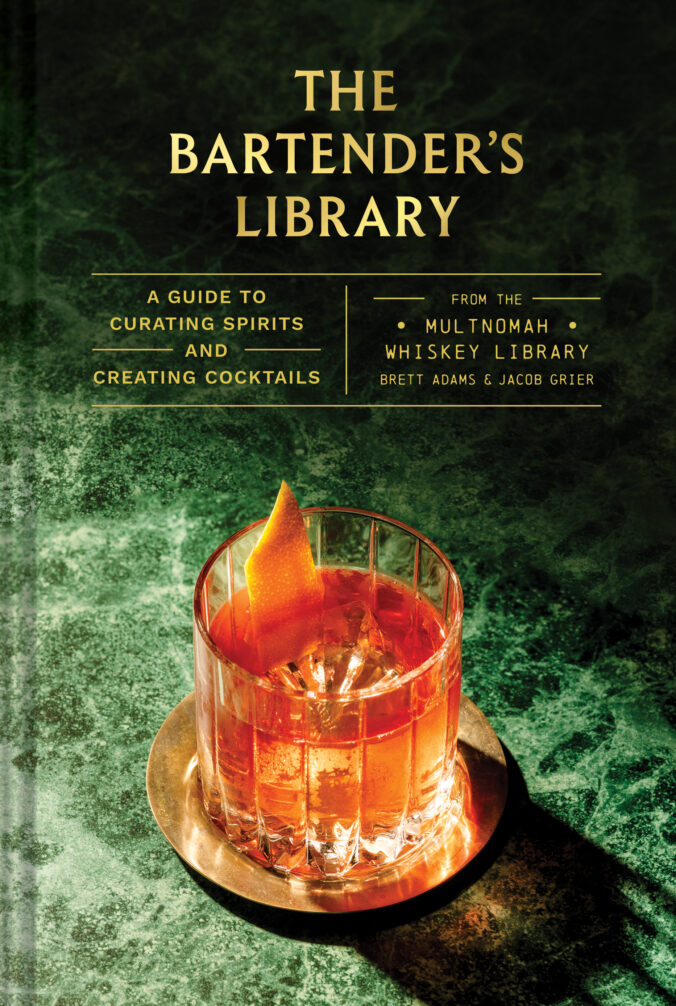
My new book with Brett Adams, The Bartender’s Library, is almost out! The official release date is October 13, but if you order now or buy a ticket to our party at the Multnomah Whiskey Library, you may get a copy before then. I’ve seen that a few friends have received their pre-orders already.
We’re planning a handful of events in Portland, Seattle, and Texas this month, with more in the works. Follow this post for updates.
The Mutlnomah Whiskey Library, October 12, Portland, OR – Book signing with Brett and me, plus some fantastic pours of whiskey and other spirits. Get your tickets now; as of this writing only 11 spots remain.
Powell’s City of Books, October 15, Portland, OR – Book signing with Brett and me plus cocktail reception.
Lit Fest, October 17, Lockhart, TX – Hospitality panel with Veronica Meewes, Annie Brown Verdin, and me, hosted by Best Little Wine and Book Shop.
Murray’s Tavern, October 18, Austin, TX – Details coming soon!
Book Larder, October 21, Seattle, WA – Book talk with Brett and me, moderated by my friend Andrew Bohrer. Ticketed event.
Here Today, October 22, Seattle, WA – Drinks and meet up with Brett and me starting at 6:00 pm. Details coming soon!
In January of this year, authorities in Iraq arrested an alleged drug kingpin named Kazem Hamad. Hamad is accused of operating a criminal network in Australia netting hundreds of millions of dollars in illicit sales. This organized crime often turned violent, with police recording countless instances of extortion, hundreds of arsons, and several homicides, including one taking the life of an unrelated bystander. None of this is atypical for gang-driven drug trafficking. What makes Hamad’s case unique is that one of the main drugs he trafficked is legal throughout the world, including in Australia. His criminal empire was built on nicotine.
Legalizing two flavored e-cigarettes is thus an important symbolic change, but vaping advocates may come to regret the way it came about. In public perception, this aspect of tobacco harm reduction is now indelibly tied to the second Trump administration’s slapdash, conspiratorial, and corrupt approach to public health.
Reporting from The New York Times reveals that the tobacco company Reynolds American made a $5 million contribution to Trump’s super PAC Maga, Inc., at the end of April. Trump himself had lunch with nicotine industry lobbyists and executives at one of his Florida golf clubs, during which he reportedly called Kennedy to complain about the FDA’s regulation of e-cigarettes. Less than a week later, the agency announced its decision to keep flavored vapes on the market, blindsiding officials at the agency and prompting Makary’s resignation in protest. Whatever the merits of the FDA’s new approach, this is certainly no way to make credible health policy.
Other than my own living quarters, there’s no place in Portland where I’ve spent more time than the Multnomah Whiskey Library. I came on as a fill-in bartender for what was supposed to be just the holiday season in, I think, 2014. Somehow that stretched into more than a decade of staying on board as a regular bartender or at least occasionally picking up a shift, taking on what I jokingly called a “substitute teacher” role there when they needed some temporary coverage.
Brett is the actual teacher in his role as education manager and spirits curator. He has the enviable job of curating the Library’s collection of about 2,500 bottles. This project is our attempt at distilling the experience of visiting the Library into book form, providing an education in spirits, advice on how to curate a collection of any size, ideas for flights, and recipes for about 70 of our house cocktails. We get to go into much more depth and get more complex with the cocktails in this book than we did in Raising the Bar. You could think of that as your 101 textbook and this as your 202, though these are way more fun than your average your textbook and you definitely don’t need the first one to enjoy The Bartender’s Library. It’s written for anyone who wants to learn more about spirits and connect how they’re made with how they taste in the glass. I can’t wait to share it with you and hopefully see you at our book events later this year.
Specifically, the law makes it an offense to sell cigarettes, cigars, pipe or chewing tobacco, as well as various other forms of tobacco leaf, to anyone born after Jan. 1, 2009. This, its proponents say, will eventually lead to a smoke-free society, as the legal age for buying cigarettes rises inexorably until the last living smoker in the U.K. joins the choir invisible.
It’s not hard to imagine how this neat solution may falter. While no one is against banning the sale of cigarettes to teenagers, the situation will become increasingly absurd as today’s 17-year-olds age into maturity, creating a permanent division between adults allowed to buy tobacco and those who are prohibited. Supposedly, the day will come when a 50-year-old can buy a cigar from the tobacconist, but their 49-year-old friend must be turned away. Can one really expect this prohibition to be durably respected?
Bourbon and tobacco are two products practically synonymous with Kentucky. Pairing them indoors within the state’s borders, however, is surprisingly difficult. Forty-four cities and counties throughout the state have implemented comprehensive indoor smoking bans. But a whiff of change is in the air: Last year, Louisville passed an exemption for cigar bars, and a new bill in the legislature could legalize them statewide.
Louisville’s move is a rare example of government liberalizing smoking laws…
It’s no secret that Portland has become an unlikely home for superlative Texas barbecue. Less recognized is another Texas export enjoying a moment here in the Rose City: the Czech-by-way-of-Texas breakfast pastry known as a kolache.
In East Texas, kolaches are a breakfast staple in bakeries and donut shops, made in sweet and savory varieties. Growing up in suburban Houston, the standard sausage-and-cheese kolache was a reliable morning fuel for my youth soccer games. Like many Texans who moved out of state, I was surprised to find that asking for a kolache elsewhere elicited only a perplexed stare. So, I’m personally pleased to report that very good kolaches are on the rise in Portland, now appearing at barbecue restaurants, donut shops, pop-ups, and a dedicated bakery in Lake Oswego.
January 14, 2026 / jacob / Comments Off on Recommended reading: the best books I read in 2025
A positive for my reading life this year is that I’ve been reading more non-fiction than ever, though concentrated online thanks to running the link-sharing platform Seabird and curating our weekly Tidings newsletter of recommended stories. The downside of this is that I read fewer non-fiction books this year than at any time in memory, though I did make time for novels. Writing another of my own books certainly didn’t help either, and I’m excited for that project to be published this fall. I’ll have to do better in the year ahead. That said, here’s this year’s post rounding up the standout books I read in 2025.
Non-fiction:
The Sirens’ Call, Chris Hayes — Speaking of being distracted from reading, this is the most relevant current events book I read last year, critiquing the all-encompassing pulls for our attention online. I’m sympathetic to the diagnosis, if less so for suggested regulatory fixes. Worth reading alongside recent works by Robert Talisse; I also discussed the book a bit in my recent article about the Portland protests.
The Voltage Effect, John A. List — I rarely read business books, but this one on figuring out how to make good ideas scale is both good and relevant to my work on Seabird.
A Cheesemonger’s Tour de France, Ned Palmer — Picked up for a visit to France this summer. An English cheesemonger takes a trip around the country, highlighting the cheeses of each region and how they were shaped by local history. Very enjoyable!
Modern Caribbean Rum, Matt Pietrek and Carrie Smith — At 850 pages I’ll confess I didn’t read this one cover-to-cover, but it’s an indispensable resource if you’re interested in rum, and it was invaluable to me in understanding facets of rum production.
Fiction:
Brotherless Night, V. V. Ganeshananthan — Superb novel about life in the Tamil region of Sri Lanka during the civil war with the Tamil Tigers. So grounded in and reminiscent of actual events that I constantly had to remind myself that it was a work of fiction. If I have to choose, this is the best novel I read all year.
Crooked Plow, Itamar Vieira Junior — Immersive magical realism set among the post-slavery but still oppressed tenant farmers of Brazil.
Felony Juggler, Penn Jillette — Autofiction from Penn of Penn and Teller fame. Not quite but almost autobiography, at least up to the part where the felony murder happens and the fictional plot gets properly set in motion, but as close we’ll likely get from him. A fun, comedic noir romp. Reviewed here.
The Magician of Lublin, Isaac Bashevis Singer — Whenever I travel somewhere new, I pick up a novel set there to read during the trip. For a visit to Krakow and Warsaw, this story of a womanizing Polish magician unsurprisingly appealed to me. My first read of Singer, recommended.
The Anomaly, Herve Le Tellier — Similarly for France, I finally got around to this popular, mildly sci-fi novel by a French author. Intriguing premise that takes a while to reveal itself (I suggest not reading the description), hard to put down.
Frankenstein, Mary Shelley — My previous visit to Switzerland introduced me to le Carré’s The Night Manager, but this year Shelley’s Frankenstein called out to me, in part due to hype for the new movie adaptation. Of course I knew the beats of the story, but it’s excellent on its own merits and rewards taking the short time to read it to experience how sensational it must have felt when new.
The Hotel New Hampshire, John Irving — I was expecting something a bit lighter for this pick for my summer vacation in New Hampshire. Very funny and imaginative in parts; whether it carries the weight of its darker elements is debatable. I’m intrigued enough to try more of Irving’s work.
This was very much not my typical Wednesday night. Though I live in Portland, where protesting is one of the city’s favorite pastimes, my preferred mode of political activism is sitting in a coffeeshop typing words on a screen. I’m less inclined to assemble in large groups in which my message is limited to what I can convey on a sign or t-shirt, surrounded by other protesters whose views may be at odds with my own. In Portland, the message of late had been reduced to pure absurdity, images of human-sized frogs staring impassively back at lines of federal officers in riot gear. As the protest went viral, I found myself intrigued to join. “What is it like to be a bat?” the philosopher Thomas Nagel famously asked. I wanted to know what it’s like to be an inflatable frog.
Thanks to several decades of comic book saturation at the movies, we all know the plot beats of a superhero epic. An intriguing origin. A rise to power. An unexpected fall followed by a journey in the wilderness. Finally, a heroic victory and return, coming back stronger and wiser than before.
It’s not too much of a stretch to apply that story arc to the cocktail, the subject of the latest book from drink historian David Wondrich. In The Comic Book History of the Cocktail: Five Centuries of Mixing Drinks and Carrying On, Wondrich teams up with illustrator Dean Kotz to tell the story of the mixed drink, from the hazy origins of the first punches to the dark days of Prohibition and disco-era Harvey Wallbangers, to the contemporary revival of old-school drinks, forgotten ingredients, and culinary prestige in the bar world.
This Saturday, October 18, is the next No Kings protest in the United States and around the world. Millions of people are going to show up for it. You should be one of them. I say this as someone who is not a natural protester. I’m a writer and my default mode of political activism is sitting in a coffeeshop writing words on my laptop, figuring out precisely what I want to say, and putting it out in a magazine or blog to reach whomever wants to read it. (Which is what I’m doing right now actually, greetings from The Madison Place in Cincinnati.) Protesting is messier. You’re in a big group, your message is limited to what you can fit on a sign or t-shirt, and other people around you might be conveying other messages that you don’t agree with at all. That’s OK, you should go anyway.
Right now there is value in simply showing up. The first message is simply numbers, a demonstration that Trump’s anti-constitutional power grabs, corruption, and cruelty are deeply unpopular. The more millions, the clearer the message. Your individual contribution to this is quite small, but if you care about the future of this country, it’s worth going.
The second message of the protests is that the Trump regime is not normal. For Americans who either don’t follow news closely or ensconce themselves in news silos that only reinforce their own views, it may not be obvious that Trump presents a decisive break with normal politics and a genuine threat to Constitutional government and our democracy. One goal of the protest is to raise the alarm and shake such people out of their complacency. This is where you may be positioned to play a more valuable role. The less of a natural protester you are, the louder the signal you send by you taking time out of your Saturday to march and wave a sign.
I live in Portland, Oregon, where protesting is a municipal pastime. Still, some people are more likely to protest than others. We expect to see the young and nonconformist at a protest; we expect to see the friend who never shuts up about politics in his Facebook posts. It’s great that they’re there, but it’s not surprising. You showing up to a protest might be. Are you not particularly vocal about politics? Do you have a comfortable job or home life that’s not directly threatened by Trump in any obvious way? Do you have lots of other things you could be doing instead? Great! That makes you the perfect kind of person to send a message by joining a protest.
The social media era has been terrible for political discourse in many ways, but one good thing to come out of it is that you can instantly broadcast your presence at a protest to a wider audience. Awareness of your attendance isn’t limited to the people who happen to see you, who likely agree with you anyway. With a quick post on social media, you can show your entire online social network that you’re there. And I mean you, specifically. Whoever you are, you presumably have people in that network who respect and admire you. Maybe they’re childhood friends, people from church, people from work, other parents from your kid’s soccer team. By showing up and posting, you send them the message that Trump’s anti-constitutional takeover of the government is genuinely alarming and encourage the norm that they should take part in opposing it too. (Again, all the more the so the less likely they are to perceive you as a natural protester.)
You might even get lucky and amplify your message even more widely. I happened to be traveling in Denver during the big protest in April, but I took a little time out of my day to show up at the local protest and post a photo to Facebook. That led to questions from a reporter and getting quoted in coverage from CBS News. It was a lucky break, and it’s certainly not the kind of thing you can count on, but it definitely would not have happened if I’d gone to brunch instead.
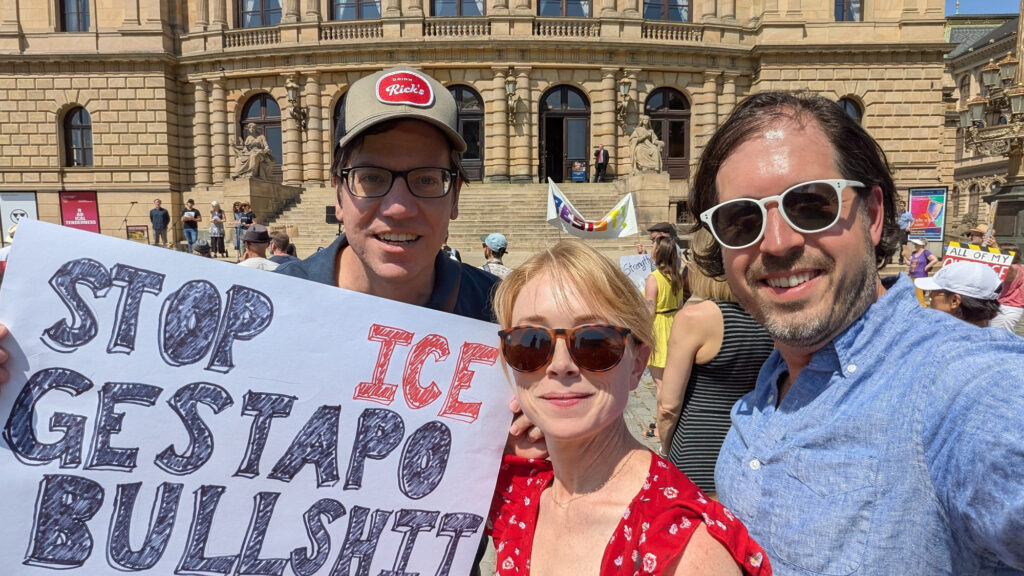
Also, going to a protest can be fun. It’s an opportunity to meet up with friends and walk around your city. The photo at the top of this post was from the first No Kings protest in June, when we happened to be in Prague. (Why am I always traveling on the protest days?) I got to meet a longtime internet friend and then explore the city and attend a Czech beer festival. You can do the same kind of thing wherever you are. If showing up alone seems daunting, make a plan to go with friends. (That said, showing up alone is fine! You’ll likely find plenty of people willing to welcome you in and possibly some signs to carry.)
If you’re reading this, you presumably know how bad things are. You also know that all is not yet lost. Whatever your differences with other protesters, those can be worked out in the course of normal politics, when and if we finally return to that. Now is a time for joining. If you want to look back at this era and know that you took some part in opposing the encroaching evil, the least you can do is show up to a protest near you this Saturday. You might even discover that you’re having fun.
In 2023, I got the idea to bike to 100 different coffeeshops in Portland. I wasn’t actually sure that there were 100 shops worth going to, but it seemed possible, and by the end of the year I’d reached my goal and still hadn’t made it to every shop I’d like to visit. Writing about the project, it turns out, was a more difficult endeavor. It could have been just a story about coffee, but every time I sat down to write about it, I felt like it also needed to tie into right-wing delusions about Portland and Trump’s threats against the city.
That intuition was correct. I finally published an essay about the experience at Slate on Saturday morning, the same day that Trump posted that he was “directing the Secretary of War [sic]… to provide all necessary Troops [sic] to protect War [sic] ravaged Portland… authorizing Full Force [sic], if necessary.” My Slate piece offers a very different picture of Portland. As I reflect there:
I set out on my bike and coffee journey at a time of optimism, the dark days of the pandemic receding and the possibility of permanently excising Trump from American politics on the horizon. Looking back on it today, I can’t help but see the contrast with the MAGA movement’s anti-multicultural malevolence. Every one of those 100 cups was a lesson in enrichment thanks to international trade, immigration, and urbanization, sources of dynamism that this administration is strangling with its backward-looking efforts to define “real America” as suburban, white, and definitely not woke.
Trump’s brand of politics feeds on the lie that multicultural cities are frightening and chaotic. If he follows through on his threats to deploy National Guard troops to Portland, it won’t be for the benefit of the people who call the city home. The intent will be to incite a spectacle of chaos, manufacturing a crisis to retroactively justify the belief that Democrat-run cities are in need of forceful takeover. The provocation will be the point.
Read the whole thing for much more, including quite a bit about how the Portland coffee scene has become much more diverse, and why the early 2000s fear that Starbucks would crush indie coffeeshops was way off base in hindsight.
For completeness, here’s the full chronological list of Portland coffeeshops I rode my bike to, documenting them mostly through Instagram stories with the hashtag #biketobeans from May to December of 2023. I lived almost right in the center of the map for this project, in the Lloyd District on the central eastside. The Lloyd District is not exciting, but it is very convenient for getting to all the more interesting neighborhoods in Portland by train, streetcar, bus, bike, or car (gross), which is why I ended up there for so long.
Lastly, it’s worth noting that by the time I started plotting out my final rides of this project, I realized there were more places I wanted to go than I could fit into a list of 100. Even more coffeeshops have opened up since then, many of which I haven’t made it to yet. I could easily add more shops if I ever restart #biketobeans. (I still bike to beans of course, just without the hashtag.)
1. Roseline Coffee (Alberta) — A bustling, airy coffeeshop with great pastries, and one of my current favorite places to post up with a laptop.
2. Upper Left — It was on a bike ride on a particularly perfect Portland spring day that I determined in earnest to try biking to 100 different shops!
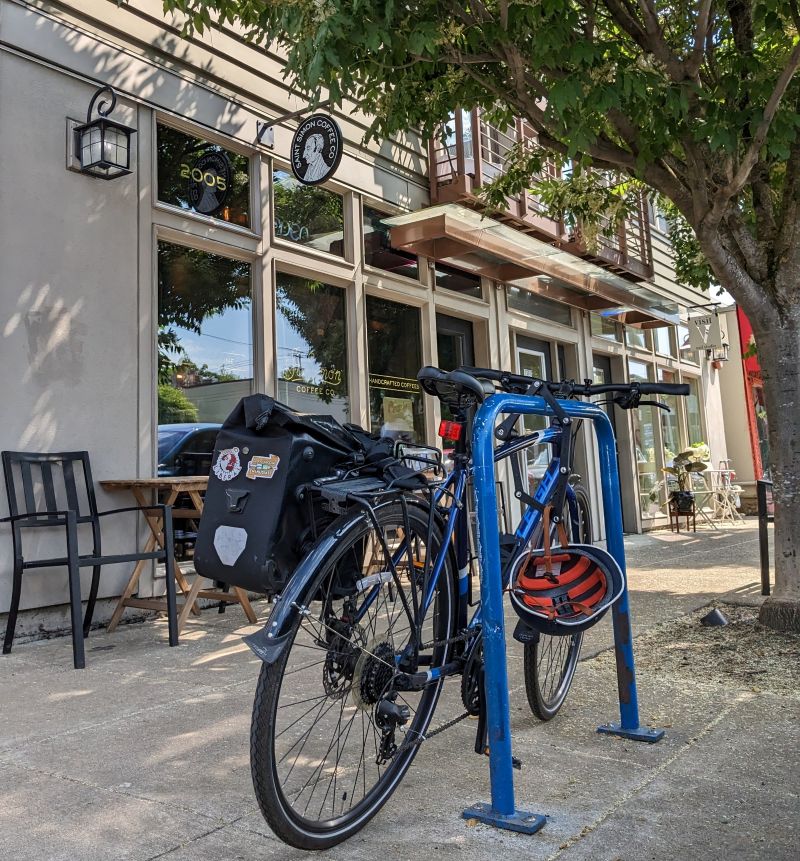
3. Saint Simon (Broadway) — This was my near-daily spot for years when I lived in the Lloyd District, even though it has just three tiny tables and I’d sometimes have to move on to somewhere else if I needed to work. Charming, cozy place that may or may not be named after a Shins song. I still go there often, even though I live further away now.
My bike in front of Saint Simon on Broadway. The stickers on the bag say “Neoliberal” and “Covid vaccine enthusiast,” which tells you a bit about my politics!
4. Euko
5. Day Lily — Now Cafe Rosetta. Haven’t been yet, but looks nice!
6. Albina Press (Albina) — My original Portland go-to that I’ve visited hundreds of times over the years. Still a great place with big windows and warm wood.
7. Never Coffee (SW 12th) — Is it physically possible for me to start a shift at the Multnomah Whiskey Library without getting coffee here first? Signs point to no.
8. Stumptown (Belmont) — If I were doing this project over again I wouldn’t go to as many Stumptown locations to leave space for other shops, but as of stop number 8 I didn’t know how selective I could be and still make it to 100.
9. Crema (Ankeny)
10. Concourse Coffee — RIP, the sports decor here was very cool.
11. Coava (Grand) — I love this space. Great pour over coffee and big communal wooden tables.
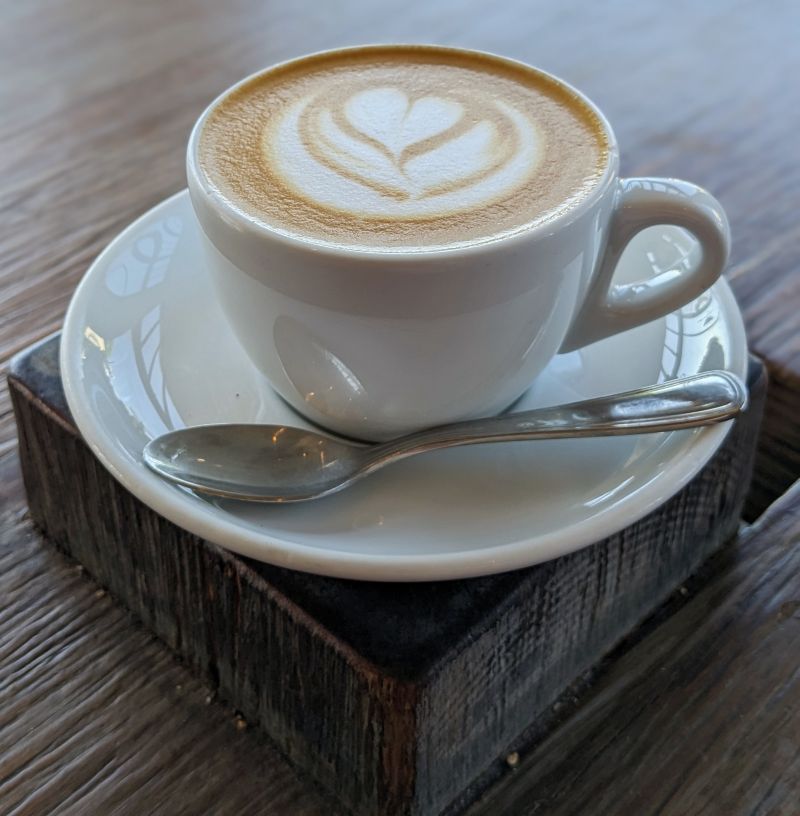
Perfectly prepared at Coava.
12. Barista (NW 23rd)
13. Seven Virtues (Sandy)
14. Saint Simon (Brazee) — Just a few blocks from the original Saint Simon, you’ll find a lot more seating here, including a nice pup-friendly patio.
15. Roseline (Davis) — Outdoor seating is tough in rainy PDX, making the covered outdoor space here a real gem.
16. Albina Press (Hawthorne)
17. Either/Or
18. Water Ave (SE Water Ave)
19. Puff Coffee — The newer venture from Stumptown founder Dwayne Sorenson. Really good, with a nice covered space semi-open to the elements. You can’t buy the psilocybin-infused coffee they collaborated on there, but you can take its existence as a sign of how the specialty coffee industry has become a bit more relaxed in recent years.
20. Holly Rose
21. Proud Mary — A must-visit for serious coffee tasting, but also a destination-worthy brunch restaurant in the Australian coffeeshop style. This is the first American location for the Melbourne-based company and they’re a wonderful addition to the city.
22. Case Study (NW 23rd)
23. Good Coffee (NW Raleigh) — Opening out on a wide open courtyard, this might be my favorite place in Portland to read a book on a sunny day.
24. Portland Cà Phê (MLK) — Showcasing Vietnamese coffee, and also worth a visit for a banh mi.
25. Cascadia Coffee Pub
26. Capitola Coffee — Tucked away on the north end of Mississippi, you might not know from the street that there’s a lovely inner courtyard here where you can enjoy your coffee.
27. Case Study Coffee (Alberta)
28. Abba Coffee
29. Deadstock — A tiny coffeeshop for sneakerheads, one of the more uniquely Portland places I wasn’t able to work into the article.
30. Caffe Umbria (NW 12th)
31. Common Grounds — I accidentally left my bike unlocked outside here for a couple hours and it was still there when I got back. Major fail for the crime-ridden hellscape!
32. Kalesa Coffee
33. Stumptown (SW 3rd)
34. Nova Coffee — It’s a coffeeshop on the first floor of an apartment building named Hygge, so it’s surprising I haven’t lived there.
35. Good Coffee (SW Alder) — Located in the Woodlark Hotel, this is now a Roseline. Texan bonus: thanks to its association with the hotel’s Bullard restaurant, it’s one of the only places in Portland where you can reliably snag a kolache for breakfast.
36. Case Study Coffee (SW 10th)
37. Fresh Pot (Mississippi)
38. Red E
39. Cathedral Coffee (N. Willamette) — At a bit over 7 miles, this was my farthest trip out. A bit of a climb on the way there but a cruise downhill coming back, and one of the more scenic rides looking south to the city from the high elevation along the water in North Portland.
40. 40 Lbs Coffee Bar (SW 2nd)
41. Stumptown (SW Harvey Milk) — Technically closed now, but they opened a brand new location around the corner.
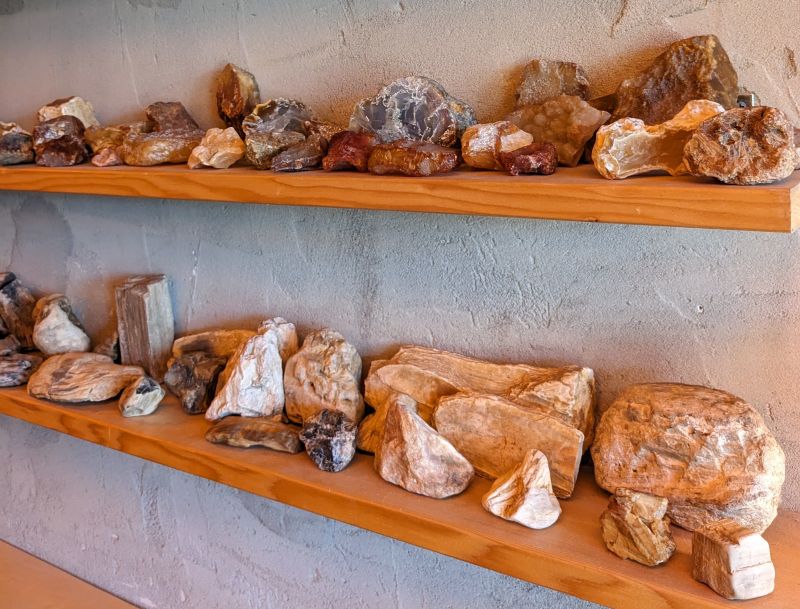
42. Carnelian Coffee — Cool rocks! A bit of a ride from the city center, but a very bike-friendly route with lots other places worth visiting in the area, like An Xuyên Vietnamese bakery in the morning or Pizzeria Otto later in the day.
Cool rocks at Carnelian Coffee.
43. Space Monkey Coffee
44. Good Coffee (SE 12th)
45. Exquisite Creatures
46. Rose City Coffee — Big space with occasional live music, which can be hit or miss in coffeeshops, but the band really added to the scene on my visit.
47. SeeSee Coffee — A motorcycle-themed coffee shop, now a different motorcycle-themed coffee shop called One Moto Cafe.
48. Heart Coffee (Burnside) — They don’t have wifi, which is nice when I’m in the mood to unplug, but it does mean I don’t visit as often as I’d like. One of my go-to though.
51. Less and More (SW 5th) — This is their outdoor kiosk, which is great, but I regret not also making it to their nearby brick-and-mortar. Very inventive drinks!
52. Prince Coffee (NE Fremont)
Anijsmelk latte at Prince Coffee.
53. Never Coffee (SE Belmont)
54. Heart Coffee (Woodstock)
55. Coffee Beer
56. Honey Latte Cafe
57. Wild Rose Coffee — The location I visited is closed now, but their new digs are only a block away from it.
58. Pajaro — Too sweet for this world! Now the coffee kiosk Our Spot.
59. Great North (Alberta)
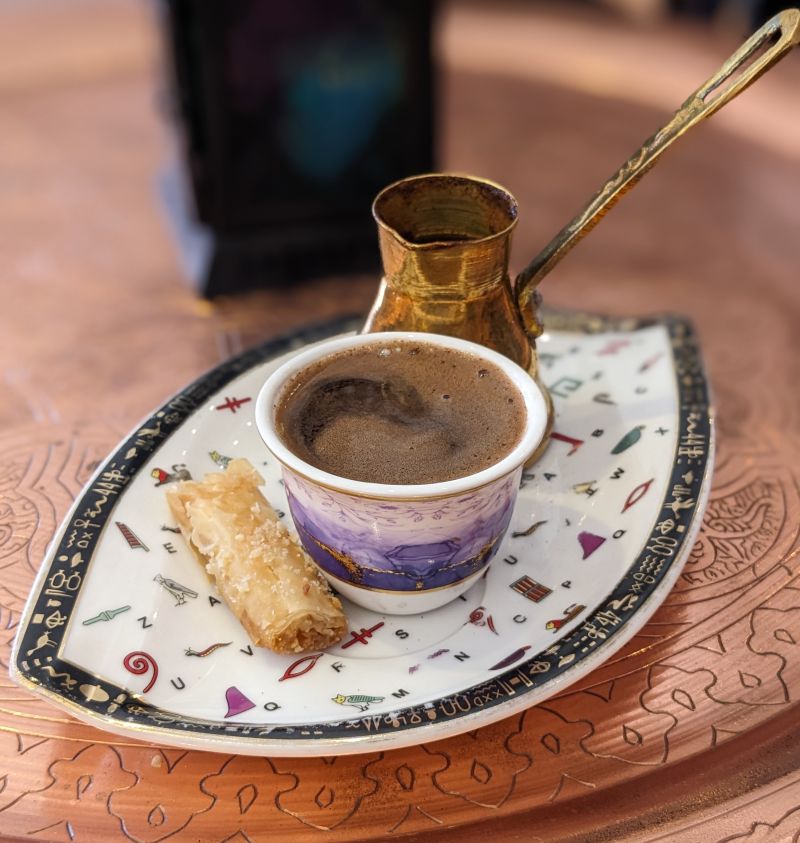
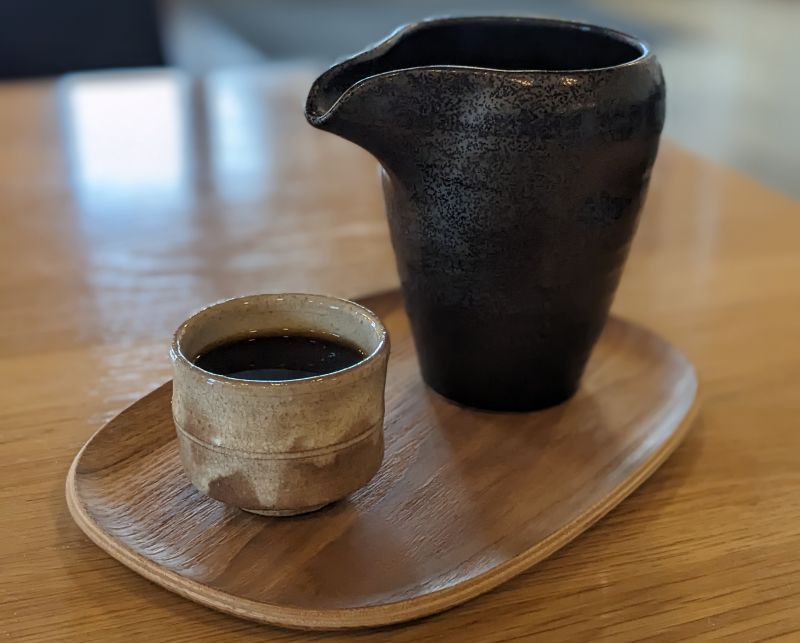
60. Tov — Mentioned in the article, go for the cardamom-spiced Egyptian coffee.
Coffee at Tov.
61. Cafe Olli — Now also offering Ollini next door for your morning pastry needs.
62. Hypnos
63. Kopi Coffeehouse — I liked that this place specialized in Indonesian coffee, so I’m bummed that it’s closed. But the location is still a coffeeshop, No Preference, which I haven’t made it to yet.
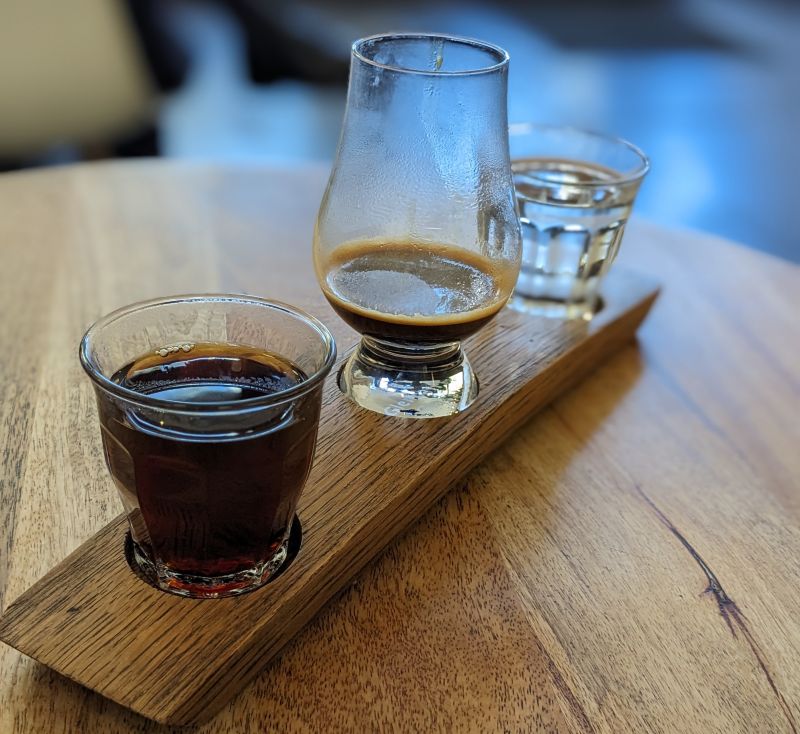
64. Sterling Coffee Roasters — They had me at espresso in a glencairn.
A flight at Sterling.
65. Case Study (Sandy) — Coffee and writing session at Case Study followed by teriyaki at Du’s Grill, an unbeatable combination.
66. Coava (SE Hawthorne)
67. Spella Cafe (SW Alder) — Small Italian spot with lever-pulled espresso.
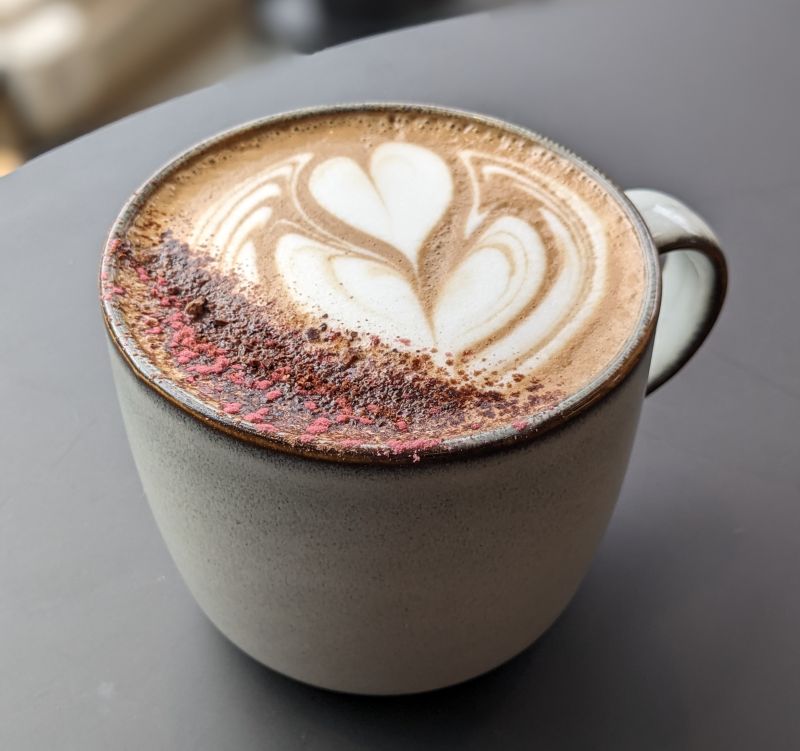
68. La Perlita — Get the true Mexican mocha to stay and a bag of beans to take home.
The true Mexican mocha at La Perlita.
69. Presso Coffee (N. McClellan)
70. Wallflower Coffee
71. Coava Roastery (SE Main)
72. Extracto
73. Autumn Coffee Roasters (NE Killingsworth)
74. Crema (NE Couch)
75. Barista (NW 23rd)
76. Queue — Closed, but a fun-looking Thai coffeeshop called Kaleido has taken its place.
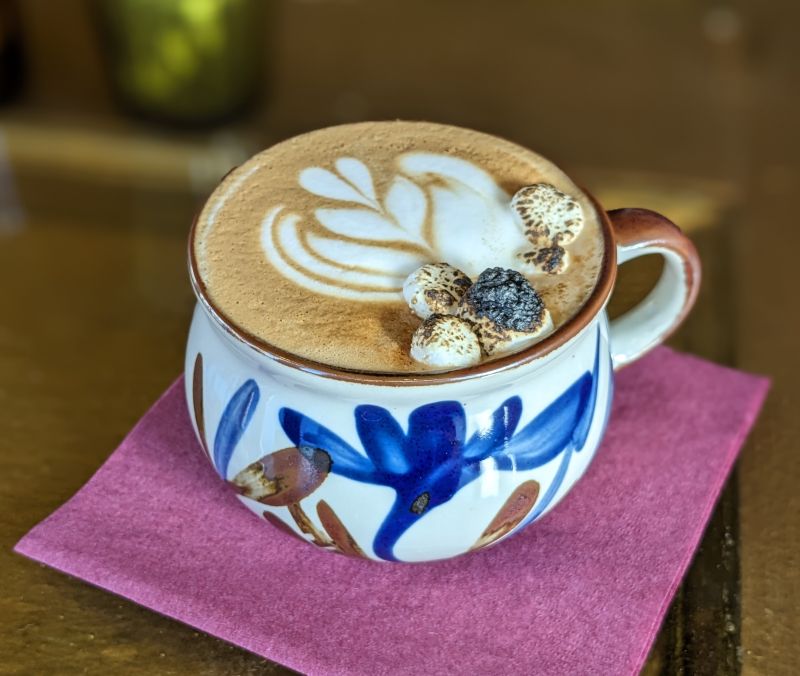
77. Dear Sandy — I’m often asked where one can go for late night coffee in Portland. Dear Sandy is the answer! Don’t pass up the cocktails, including non-alcoholic offerings.
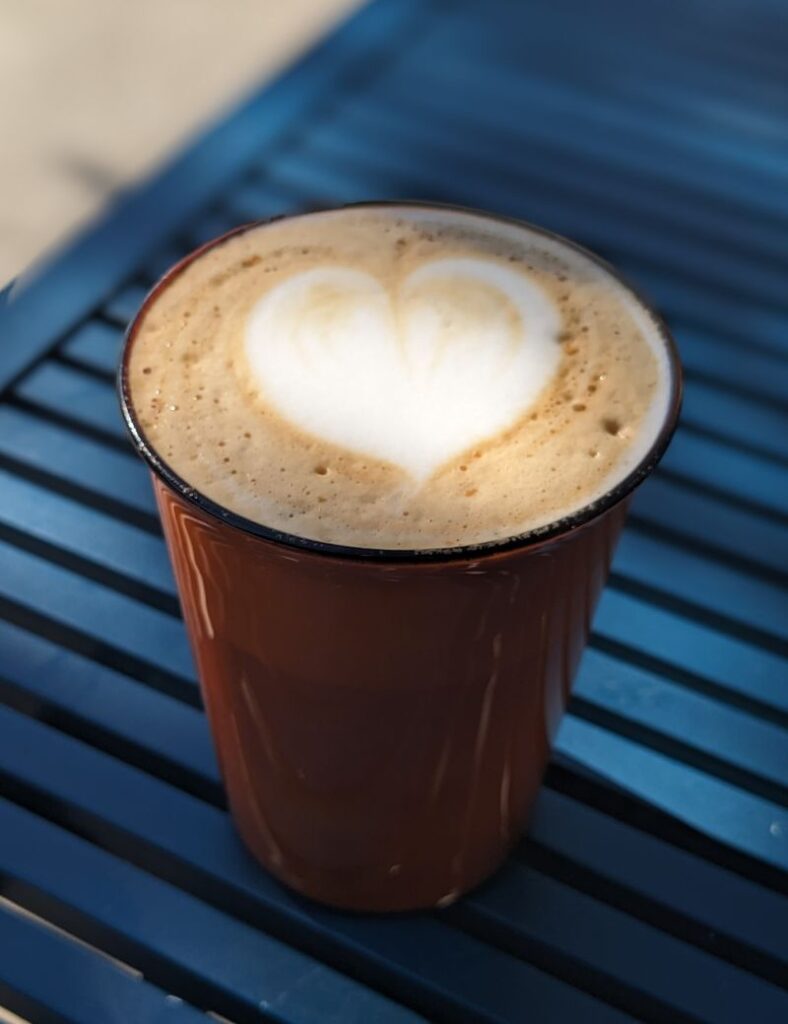
A fun drink at Dear Sandy.
78. Grendel’s
79. Oblique
80. Twenty-Six Cafe — Obviously, I should have made this my 26th stop.
81. Happy Cup (Williams) — Now a “build your own dessert bar” called Memoz.
82. Tiny’s (MLK) — Now a location of Harder Day.
83. Rx Coffee — Now closed, Frontera Sur just moved in serving Mexican breakfasts.
84. Stumptown (Division) — The original Stumptown and still a solid shop! If you’re going to visit one Stumptown, make it this one.
85. Nossa Familia (Division)
86. Hoxton — I don’t know if the coffeeshop in the Hoxton Hotel has a name, but it was one of favorite places to write back when they offered unlimited refills on Proud Mary coffee for just three bucks (a privilege I shamelessly abused). I think those days have passed, but it’s still a nice lobby to work in.
87. Futura (Rosa Parks)
88. Greenbridge — The shortest ride from my old apartment, less than a block away. It was silly to get on a bike to go there but the project demanded it.
89. Electrica
Pour over serve at Electrica.
90. Soro Soro
91. Cadejo
92. Keia and Martyn’s Coffee (Lloyd Center) — My second shortest ride, nice to see them making it work in the Lloyd Center.
93. Courier
94. Cup of Joe — Run by a super nice guy named, you guessed it, Joe, in the Big Pink building downtown. Go say hi!
95. Bastion
96. J Vein Caffe — I had to make it to at least one coffee truck, right?
97. Super Joy — Indulge in the Sichuan pepper mocha.
98. Guilder (W Burnside) — Located inside Powell’s, where you’re obviously going to end up on a trip to Portland.
99. Koken — I went for the Ethiopian coffee but would like to return for the food. I see them listed as temporarily closed now, so I hope they return.
100. Junior’s — Renamed as part of Guilder. My final stop, so it had to be good coffee and a good ride! By late afternoon it transitions into an Upright Brewing tasting room. Upright is (very sadly!) closing, so get their beer while you can, but the space will continue serving beer from other breweries.
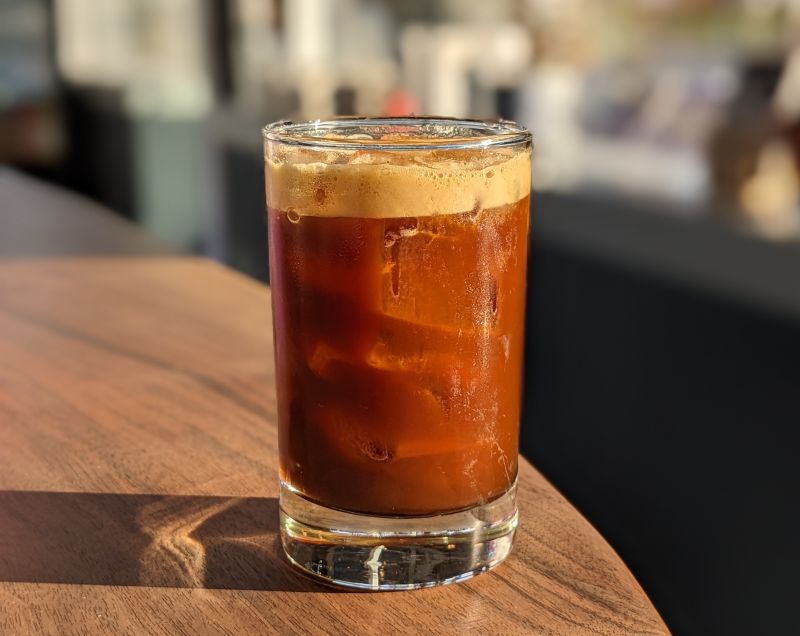
End of the line for my #biketobeans journey! Shakerato with espresso, panela sugar, and orange bitters at Junior’s.
Jacob Grier writes about public policy, lifestyle, and books in Portland, Oregon. His own books are The New Prohibition, Raising the Bar (with Brett Adams), The Rediscovery of Tobacco, and Cocktails on Tap. He has written for a wide spectrum of publications, including Slate, Reason, The Atlantic, The Washington Examiner, Inside Hook, Imbibe, and many others.


Recent Comments